

AI Model Routing: How Accounting Firms Can Cut AI Costs Wisely
Why pay for a premium AI model to filter a client list when a spreadsheet formula does it free? That’s the question Kevin Phillips put to accountants on AccountingWEB on 12 November, and it lands at the right moment. As practices roll AI into everyday work, many are about to discover that the cost of using it badly can quietly eat the efficiency it was supposed to deliver.
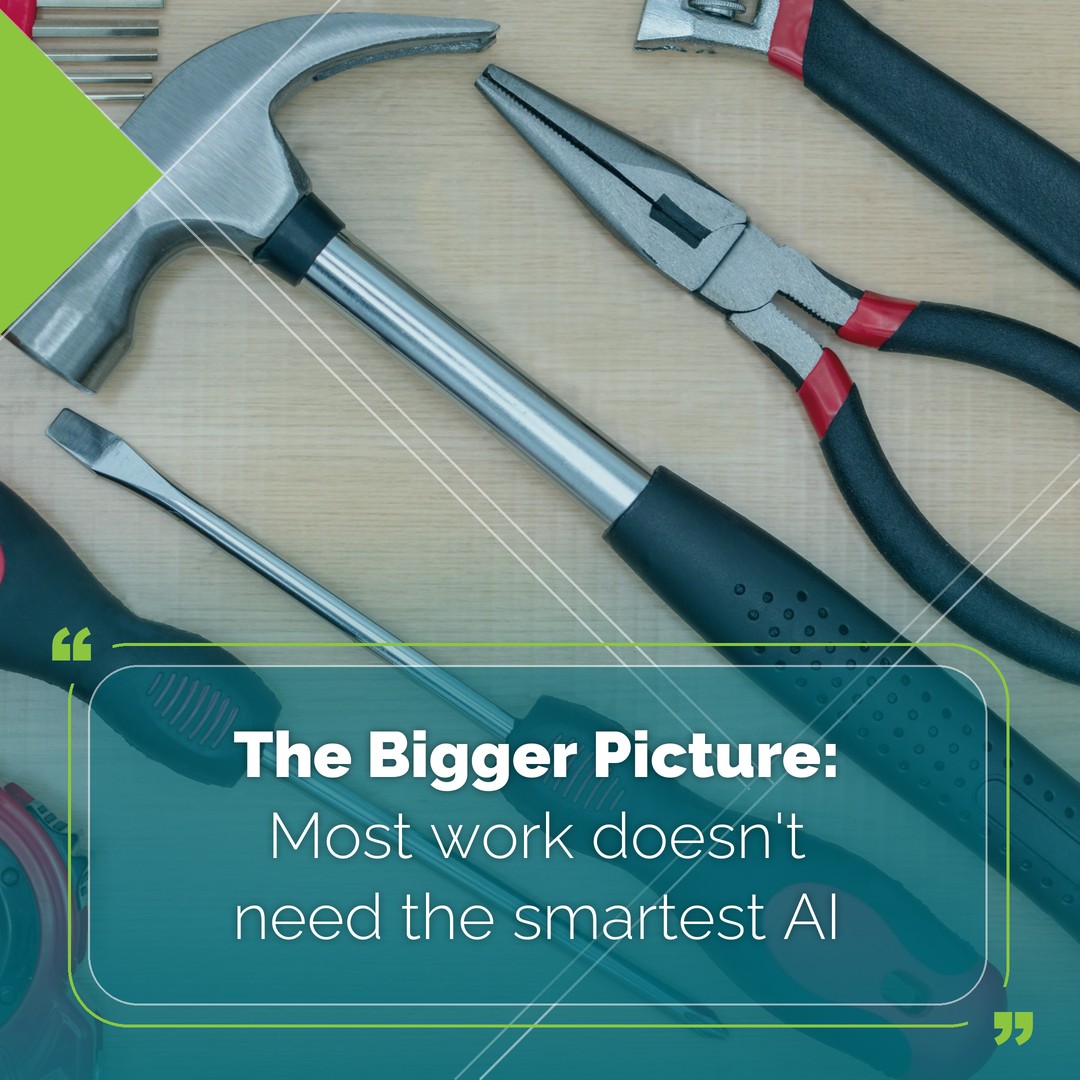
The bigger picture: AI has become a cost line, not a free extra
Phillips’ argument builds on an earlier point he made about AI token budgets: cheaper tokens won’t save your budget, because people simply use more of them. His new point is that the bigger lever is which AI does each job.
He compares it to how a practice allocates people. You wouldn’t put your most senior partner on data entry. Yet most of us open whichever AI model we pay for, or whichever one is built into the app in front of us, and use it for everything from a board paper to reformatting a column of dates. As he puts it, AI can be an expensive hammer when you swing it at every job in the building.
The fix he describes is model routing, the AI equivalent of the least-cost call routing that businesses used for phone systems in the late 1990s. Each task goes to the least costly model that can do it properly, and the premium models are saved for work that genuinely needs them.
For accounting firms, this isn’t a technical curiosity. Accountancy is a margin business built on time, and AI is fast becoming a new input cost. Practices that manage it like any other overhead will keep more of the efficiency gains. Those that don’t will hand a share of them to their software providers.
What independent accountants need to know
Not every job needs AI at all. Phillips’ first layer is the simplest: if a formula or a macro does the job, use that. You can ask an AI to write the formula once and then let the spreadsheet run it for free. That alone takes a surprising amount of routine work off the meter.
Most routine work suits smaller models. Categorising transactions or summarising a client email doesn’t need a flagship model. Providers sell their models in tiers, and some, such as ChatGPT, already decide for themselves whether a question goes to a fast model or a slower reasoning one. Small language models, built for narrow jobs, can cost a fraction of the large frontier models to run, often by an order of magnitude, according to Phillips. They won’t write your strategy paper, but they will sort a thousand invoices into cost codes quickly.
Owning may beat renting for steady workloads. Phillips notes that Apple began pitching businesses in September on running AI locally, with no per-token charges and data kept in-house. Local models are less capable than the best cloud models, so complex work still goes out. But for a practice with predictable, repetitive workloads, the economics are worth a look.
The savings can be real. Phillips cites Revolut, which downloaded a large language model, runs it on its own servers and made it the default for its engineers’ coding work and says its AI coding costs fell by about 90% in under a year. An accounting practice isn’t a digital bank, but the principle of matching the tool to the task carries over.
Every routing decision is also a data decision. This is the caveat that matters most for a regulated profession. Each time a task goes to a different provider, the data goes with it. On many personal AI plans, conversations can be used to train models unless that setting is switched off. Stronger contractual protection usually comes with business plans that cost more. Phillips’ question is the right one: which work are you comfortable sending to the cheapest option, and which client data should only go somewhere you’ve paid to protect it?
What forward-thinking practices are already doing
The practices getting the best return from AI are treating it as a managed resource, not a free-for-all.
They give someone ownership of AI spend. One person, often the practice manager or a technically minded partner, is responsible for knowing what AI tools the firm pays for, who uses them and what they cost.
They sort tasks into tiers. A simple three-level list works: jobs that need no AI, routine high-volume jobs for cheaper tools, and complex judgment-heavy work where the best model earns its cost. Staff know which tool to reach for without having to think about it.
They set rules on client data. A short written policy states which tools are approved for client information, which plans they must be on and which tasks must never go into consumer tools. That’s good governance, and it’s a selling point when clients ask how their data is handled.
They track the saving, not just the spend. If AI saves two hours on a set of accounts, that time should show up as capacity for new clients or higher-value advisory work. Otherwise the efficiency disappears into the week.
How this connects to growth
Margin is what pays for growth. Every pound a practice saves by using AI sensibly is a pound it can put into the things that win new clients, and the time saved is capacity to serve them.
That matters most for independent accounting firms, which don’t have the technology budgets of larger groups. A practice that routes AI work carefully can run leaner on compliance and reinvest in accounting firm growth: a better website, stronger local SEO, consistent content and targeted PPC for accountants when capacity opens up.
There’s a client-facing benefit too. Businesses are going through the same AI cost questions inside their own finance functions. A firm that can explain how it chose its tools, controls the cost and protects client data has a practical advisory conversation to offer. Write about it on your website and you also create the kind of clear, expert content that supports AI SEO and helps your firm appear when business owners ask AI tools how to manage their own AI costs.
Spend on judgment, save on everything else
The headline lesson from Phillips’ piece is simple: most of your work doesn’t need the smartest model in the room. The same is true of your people, and good practices have always allocated work accordingly. AI is just the newest resource to manage that way.
Firms that treat AI as an overhead to control, rather than a magic box to open, will keep more of the margin it creates. Firms that don’t will find their AI bills rising quietly while their fees stay where they were.
Getting this right is easier when you can compare notes with other practices facing the same choices. The CharterGroup Alliance brings independent accountants together to share what works on technology, efficiency and margin, and backs members with the marketing and digital visibility to turn saved capacity into new clients. If you want AI to strengthen your margin rather than drain it, explore membership of the CharterGroup Alliance.
Published by the CharterGroup team